
Implementers and Integrators....what is the difference?
- Sylvie Cowell
- Apr 20
- 2 min read

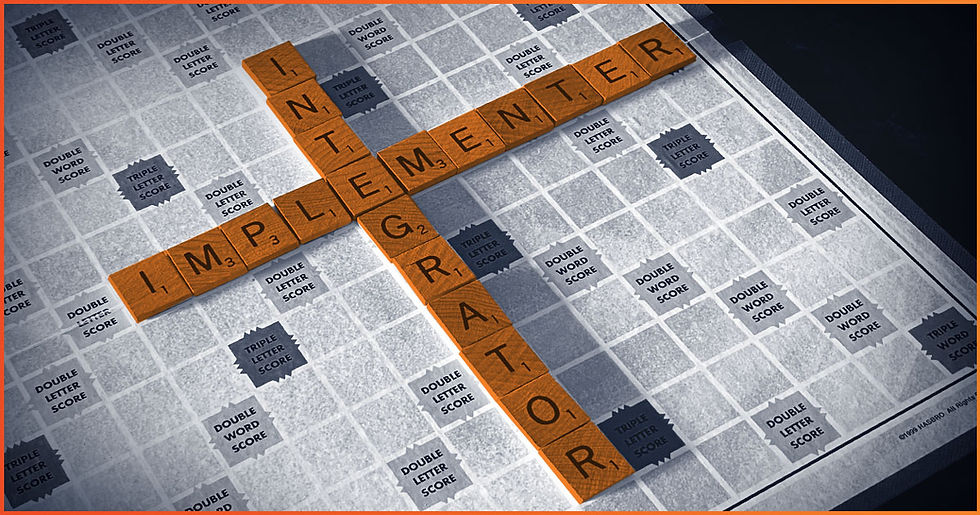
The EOS Implementer and the Integrator are not the same thing. Here is why it matters.
If you are exploring EOS for your business, you will quickly come across both terms. They are often used interchangeably. They should not be.
Understanding the difference could save you a significant amount of time, money, and frustration.
The Implementer works on the business. The Integrator works in it.
An EOS Implementer is typically an external consultant who comes in periodically — usually for quarterly sessions and annual planning days — to teach your leadership team the EOS framework, facilitate the key meetings, and ensure you are applying the tools correctly. They are a guide. They coach you through the system and then leave.
That is a valuable service. But it is not what keeps EOS alive in your business between sessions.
The Integrator is a different role entirely. In EOS language, the Integrator is your operational second-in-command — the person who sits inside the business, holds the leadership team accountable, manages the day-to-day, and ensures that what gets agreed in meetings actually gets done. They are the one who makes the system stick in practice, not just in theory.
Think of it this way: the Implementer builds the plane and teaches you to fly it. The Integrator is in the cockpit with you, keeping it in the air.
Why so many EOS implementations fail
Most founder-led businesses that struggle with EOS are not failing because the framework is wrong. They are failing because there is no one with the operational authority, time, and focus to embed it properly.
The founder is already stretched. The leadership team has day jobs. The Implementer visits every 90 days.
In between, nothing holds. Scorecards get ignored. Level 10 meetings drift back to updates. Rocks slip. Decisions default back to the founder. And the system that was supposed to free everyone up becomes another thing on the to-do list.
This is the gap the Integrator fills — not by advising, but by doing.
What a Fractional Integrator actually does
For most growing businesses, a full-time Integrator is not yet the right hire. The overhead is significant, and the role requires someone with genuine senior operational experience.
A fractional model gives you the same capability without the full-time cost. I step in as your Integrator on a part-time basis — embedded in the business, working alongside your leadership team, holding the operating rhythm, driving accountability, and ensuring that the work you are doing with EOS translates into real, visible change.
Within 90 days, the goal is a leadership team that owns their numbers, runs effective meetings, and moves priorities forward without everything defaulting back to you.
That is not advice. That is implementation.
If your EOS is not working, the missing piece is probably not the framework.
It is someone to make it work in practice.
If you want to find out more about either role, feel free to connect or message us directly
Implementer Simon Adcock
Integrator Sylvie Cowell



Comments